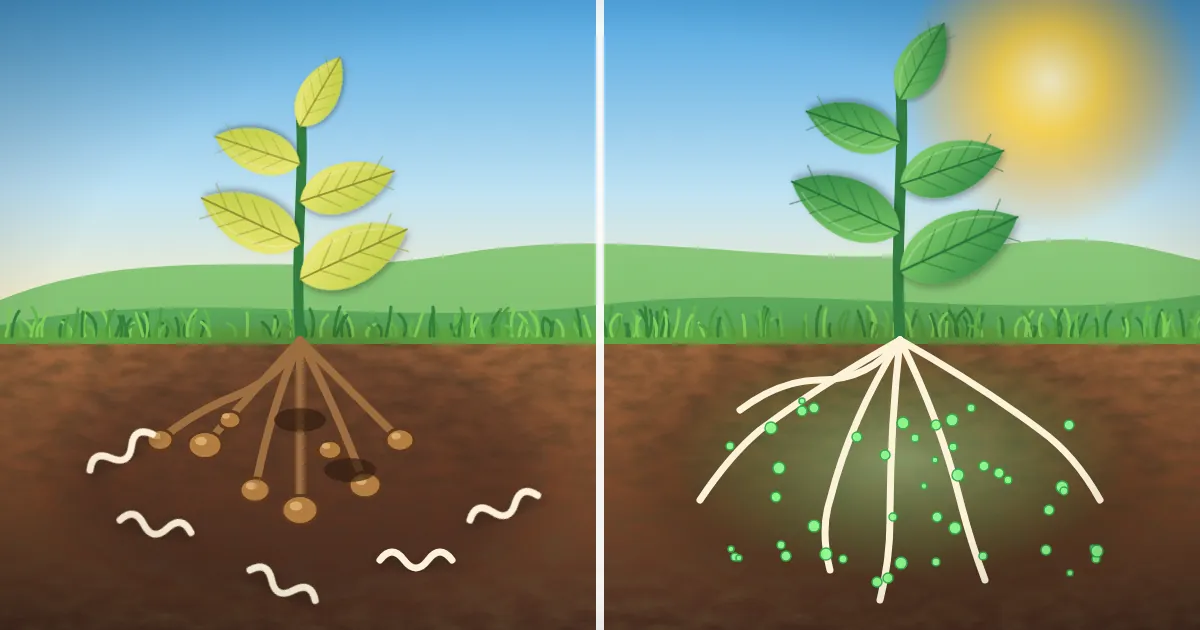
Patches of stunted, yellow plants that wilt at noon even when the soil is wet. Roots that look knotted, brown or rotten. Many farmers see this and reach for the strongest chemical on the shop shelf. That can cost a lot, harm the good life in your soil, and still not fix the cause.
This guide shows how to find out what you are dealing with and how to manage soil-borne nematodes and root rot in a way that keeps your soil alive for the next crop.
Step 1: Confirm the problem before you spend
Do not pull the plant. Dig it out with soil around the roots, wash the roots gently and look.
| What you see | Most likely cause |
|---|---|
| Small hard knots or swellings on roots, plants stunted in patches that grow bigger each season | Root-knot nematodes |
| Roots brown or black, soft, outer skin slips off like a sleeve, bad smell, wilting in wet soil | Root rot (fungi such as Pythium, Phytophthora, Fusarium) |
| Both knots and rotting roots | Both together. Nematode wounds let rot fungi in. |
| Round, pink-inside nodules that rub off (groundnut, beans, pulses) | Normal helpful nodules, not nematodes |
For a sure answer, send a soil and root sample to a state agriculture university, KVK or a trusted soil lab. Take samples from the edge of the affected patch, not the middle of the dead area.
Research by ICAR-IIVR notes that root-knot nematodes alone can cause yield losses of about 13% in chilli and 14% in okra, and the problem grows when the same host crop is repeated.
Step 2: Fix the conditions that help the problem
Root rot and nematodes both love certain field conditions. Change these first:
- Drainage. Water standing near the stem base is the biggest root-rot trigger. Raise beds, open drains and avoid watering in a way that wets the collar.
- Over-irrigation. Roots need air. Water when the plant needs it, not on a fixed habit.
- Same crop again and again. Repeating tomato, brinjal, chilli, okra or banana in the same plot feeds nematodes.
- Infected planting material. Use healthy, nematode-free seedlings. A clean nursery protects the whole field.
- Dirty tools and moved soil. Soil stuck on boots, tools and tyres carries the problem to the next plot. Clean them.
Step 3: Use a layered plan, not a single product
No single step controls these problems for good. Several small steps together do.
- Crop rotation. After a susceptible crop, grow a non-host such as maize, sorghum or other cereals for a season or more. Ask your KVK for the best non-hosts in your area.
- Summer deep ploughing. Plough deep in the hot, dry months so the sun dries out the exposed soil.
- Soil solarization. In the hottest weeks, wet the soil, cover it with clear plastic sheet and leave it for about four to six weeks. It warms the top soil and reduces many soil pests and diseases.
- Organic matter. Well-decomposed farmyard manure or compost, and cakes such as neem cake, improve soil life and help suppress nematodes. Use the amount your KVK recommends.
- Bio-agents. Trichoderma and Pseudomonas fluorescens help against rot fungi. Pochonia chlamydosporia and Purpureocillium lilacinum (also sold as Paecilomyces lilacinus) act on nematode eggs. ICAR-IIVR trials in chilli and okra found combinations of neem cake and such bio-agents highly effective against the root-knot nematode.
- Tolerant varieties and rootstocks where available.
- Registered chemicals, only if needed. Use a product registered for your crop, follow the label and follow the waiting period.
Protect soil health while you do it
- Do not apply chemicals "just in case". They can also kill the good fungi and bacteria that keep the soil balanced.
- Add compost and manure every season. Healthy, living soil makes it harder for any one pest to take over.
- Do not mix live bio-agents with chemical fungicides on the same day unless the label says it is allowed. The chemical can kill them.
- Keep records of what you applied, where and when, so you can see what worked.
Get the dose to the roots
Both problems sit in the root zone, so that is where the treatment must go. Pouring by eye wastes product at some plants and under-treats others, and wasted product costs you money and soil life.
Apply a measured dose to each plant, near the roots, on moist soil that is not waterlogged. The SWASTI Auto Soil Drenching Device lets you set the dose from 20 ml to 500 ml and fits any battery sprayer pump, so every plant gets the same amount. Read more about the method in Root-zone drenching vs. foliar spraying and How to give a measured dose per plant.
A simple season plan
- Before planting: soil and root test, deep ploughing, solarization where possible, compost, and clean, healthy seedlings.
- At planting: bio-agents in the root zone as the label directs, and good drainage.
- During the crop: walk the field every week. Dig up a few plants in any weak patch. Water only as needed.
- After harvest: remove and destroy infected roots, clean tools and plan a non-host crop next.
Before you apply anything
Read the label, wear gloves and a mask, and keep products away from children and food. Doses differ by crop and product. If you are unsure, ask your local agriculture officer or KVK.
Sources: ICAR-IIVR: eco-friendly management of root-knot nematode in chilli and okra
વારંવાર પૂછાતા પ્રશ્નો
How do I know if it is nematodes or root rot?
Dig up a plant and look at the roots. Small hard knots or galls that do not rub off point to root-knot nematodes. Brown, soft, easily peeling roots, often with a bad smell, point to root rot. Many fields have both, because nematode wounds let rot fungi enter. A lab test of soil and roots gives the sure answer.
Are the knots on my groundnut or bean roots nematodes?
Not always. Legumes make round nodules that rub off easily and are pink or red inside. These are helpful. Nematode galls are part of the root, do not rub off, and the root is brown or cream inside.
Can bio-agents like Trichoderma alone cure the problem?
They help most when used early, as prevention and as part of a full plan with rotation, drainage and clean planting material. They do not reverse heavy damage on plants that are already badly affected.
Can I use a chemical nematicide?
Only a product registered for your crop, exactly as the label says, and as a last step. Many older nematicides are withdrawn. Ask your KVK or agriculture officer which products are currently allowed for your crop.
આ સામાન્ય માહિતી છે. તમારી જમીન, પાક અને વિસ્તાર મુજબ રીત અલગ હોઈ શકે, તેથી સ્થાનિક ખેતી અધિકારી અથવા KVK ની સલાહ લો.