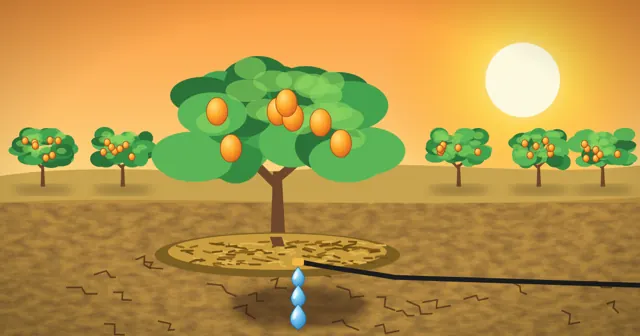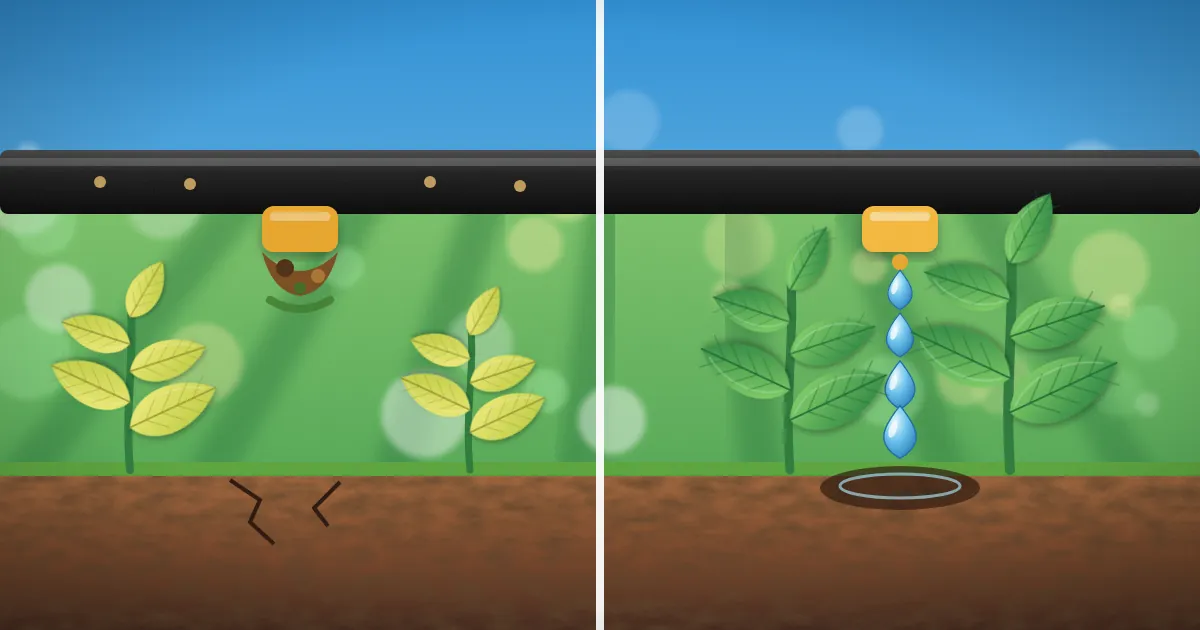
A drip system saves water only if every emitter drips the same amount. When the emitters at the end of the line clog, those plants get less water, the field goes patchy, and you may not notice until yield drops.
The good news is that most clogs can be prevented or cleared with a simple routine. This guide gives that routine in the order to follow.
Why drip lines clog
| Type of clog | What causes it | Where you see it |
|---|---|---|
| Physical | Sand, silt and tiny particles in the water | Settles at the far ends and bottoms of laterals |
| Chemical | Calcium, iron or fertilizer salts that harden into a crust (common with hard borewell water) | White or brown crust on emitters |
| Biological | Algae, slime and bacteria growing in warm lines | Green or slimy film, rusty-red slime with iron |
Knowing the type matters, because each type needs a different cure.
Step 1: Check before you fix
Do these checks every few weeks:
- Look at the pressure gauges at the pump and at the far end of the field. If end pressure falls, something is blocking.
- Walk the field while the system runs. Look for dry patches, wet patches, leaks, broken lines and emitters not dripping.
- Collect water from emitters. Place a cup or small container under an emitter near the start, one in the middle and one at the end for the same time, for example one minute. Compare the amounts. If the end gives clearly less, you have a clogging problem.
- Note your findings in a notebook so you can compare next time.
Step 2: Clean the filters first
The filter is your first defence. A dirty filter starves the system, and a damaged one lets dirt through.
- Screen or disc filter: open it, wash the screen or discs with clean water and a soft brush. Replace torn screens.
- Sand or gravel filter: backwash until the water runs clear.
- Watch the pressure before and after the filter. When the difference grows beyond what your filter maker states, clean it.
Step 3: Flush the lines
Flushing removes sediment before it forms a hard clog.
- Run the system with filters clean.
- Flush in order: main line, then sub-mains, then laterals.
- Open the end caps of a few laterals at a time. Do not open all together, or pressure falls and the water will not carry the dirt out.
- Let water run for at least two minutes, or until it runs clear.
- Close the end caps and move to the next group.
For good cleaning, the water should move fast enough in the lateral to carry sediment, around 0.5 metre per second is the usual aim. Opening only a few laterals at a time helps you reach it.
Step 4: Treat the type of clog
For slime, algae and bacteria: chlorine
- Use household-type sodium hypochlorite, which is safer to handle than powder chlorine. Powder calcium hypochlorite can react dangerously with ammonium fertilizers.
- Flush the system first, then inject the chlorine into the water so it reaches the far end. A small amount, about 0.5 to 2 ppm of free chlorine at the end of the line, is the usual target. Pool test strips can check it.
- Run for 10 to 15 minutes more, close the system for a few hours or overnight, then flush the lines again.
For white crust and hard deposits: mild acid
- Acid dissolves calcium and other mineral deposits. A common target is water pH of about 2 to 4 in the line, set by your drip dealer for your water.
- Inject after the filters, run it through, then flush well.
- Always add acid to water, never water to acid. Wear gloves and eye protection.
Never mix chlorine and acid, and never put them in the same tank as fertilizer. The mix can release harmful gas or form deposits.
Step 5: Deal with stubborn emitters
- Take out the emitter, rinse it in clean water and wash it softly with a brush.
- Soak mineral-clogged emitters in the acid solution suggested by your dealer, then rinse well.
- Replace emitters that stay blocked or drip unevenly. Keep spares.
- Do not use pins or wires.
Prevent clogs for the next season
- Keep the water tank or farm pond covered to reduce algae.
- Use the right filter for your water source. Sandy borewell water needs a sand separator or hydrocyclone before the filter.
- Dissolve fertilizer fully and use only fertilizers meant for fertigation. Do not mix products in a way that makes sediment.
- Flush at the end of every season and close the ends so insects and dust do not enter.
- Keep a simple logbook with the dates of flushing, cleaning and treatment.
If plants go thirsty while you fix it
When a line is down and plants are stressed, give the affected plants a measured, small dose near the roots until the system is back. For small plants, the SWASTI Auto Soil Drenching Device lets you set a dose from 20 ml to 500 ml per plant. Drip is still the way to give large volumes of water to trees and big crops, so fix the line quickly. For more on why even dosing matters, see How to give a measured dose per plant.
Before you apply anything
Read every label. Wear gloves, eye protection and a mask when handling chlorine or acid. Keep them away from children and food. Concentrations depend on your water, so ask your drip dealer or KVK if you are unsure.
Source: Agriculture Victoria: drip system maintenance and monitoring
সঘনাই সোধা প্ৰশ্ন
How often should I flush my drip lines?
Flush the lines before the first irrigation, several times during the season and again at the end of the season. With clean water about three flushes a season may do. With dirty water or borewell water that carries sand or iron, flush often, for example every few irrigations.
Can I use a pin or wire to open a clogged emitter?
It is better not to. A pin can scratch the opening and make the emitter drip unevenly. Flush the line, try to wash the emitter, and replace emitters that stay blocked.
Is it safe to put chlorine or acid into the drip line?
Yes, when done carefully and with the right amounts, but never mix the two and never mix either with fertilizer in the same tank. Always add acid to water, never water to acid. If you are unsure of the concentration, ask your drip dealer or KVK.
How do I know my drip system is clogging before the crop shows it?
Compare the water collected from emitters near the pump and at the far end of the lines in the same time. If the far end gives clearly less water, or pressure at the end of the lines drops, clogging has started.
এইখন সাধাৰণ তথ্য। আপোনাৰ মাটি, শস্য আৰু অঞ্চল অনুসৰি পদ্ধতি বেলেগ হ'ব পাৰে, গতিকে স্থানীয় কৃষি বিষয়াৰ বা KVK ৰ পৰামৰ্শ লওক।