Yield often falls long before the crop looks sick. A small shortage of a micronutrient, such as zinc or boron, can cut the crop even when plants look only a little pale. The plant tells you early, through its leaves. You only need to know how to read them.
First rule: new leaves or old leaves?
Plants move some nutrients around and cannot move others.
| Type | Nutrients | Where it shows first |
|---|---|---|
| Mobile (plant moves them to new growth) | Nitrogen, phosphorus, potassium, magnesium, molybdenum | Older, lower leaves |
| Not mobile (stay where they are) | Iron, zinc, manganese, boron, copper, calcium, sulphur | Younger, upper leaves and growing tips |
So, if the new leaves are pale, small or distorted, think micronutrient. If the old leaves yellow first, think nitrogen, potassium or magnesium.
The leaf reading guide
| Nutrient | What you may see | Common crops and clues |
|---|---|---|
| Zinc (Zn) | Pale or whitish patches between veins in young leaves, short gaps between leaves, small leaves | Rice (brown rusty spots), maize (pale bands), citrus and mango (small, narrow leaves) |
| Iron (Fe) | Young leaves turn yellow while the veins stay green. Severe cases bleach to white | Sugarcane, groundnut, citrus, in high-pH or calcareous soils |
| Manganese (Mn) | Yellowing between veins on young leaves, sometimes with small spots | Wheat, sugarcane, soybean on high-pH soils |
| Boron (B) | Distorted or thick young leaves, dying growing tips, poor flower and fruit set, cracked or hollow stems and fruits | Cauliflower, tomato, mango, pomegranate, groundnut |
| Copper (Cu) | Stunted, wilted young leaves, tip dieback | Citrus, cereals on organic or sandy soils |
| Molybdenum (Mo) | Pale, cupped or twisted older leaves | Cauliflower, legumes on acidic soils |
Use this table as a guide, not a final answer. Mild deficiencies are hard to judge by eye, and different problems can look alike.
Rule out the look-alikes
Before you blame a nutrient, check these:
- Waterlogging or poor drainage: roots cannot take up nutrients, so leaves yellow even with enough in the soil.
- Root problems: nematodes and root rot cause pale, weak plants. Dig up a plant and check the roots. See our guide to nematodes and root rot.
- Soil pH: high pH locks up iron, zinc and manganese. Very low pH can lock up molybdenum.
- Herbicide drift or spray burn: damage is uneven and often near a field edge.
- Disease or virus: spots, mosaic patterns and spread from plant to plant.
- Heat, cold or salt stress: leaf edges burn, and symptoms follow the weather or the water.
A true deficiency often shows as a pattern: the same on both sides of the leaf, repeating across a patch, and related to soil type.
Confirm before you correct
- Photograph the leaves and note the crop stage.
- Compare a good plant and a poor plant side by side.
- Dig a plant and check the roots.
- Soil test: pH, organic carbon and micronutrients.
- Leaf or tissue test for a firm answer. Take the same leaf position from good and poor plants.
- Small trial: treat a few plants or a row and compare after one to two weeks.
How to correct
- Quick fix on leaves: a foliar spray of the missing nutrient works within days. Follow the label exactly. Two light sprays are usually better than one strong one.
- Soil application: works more slowly but lasts longer. Use the dose from your soil test or your KVK.
- Fix the cause: improve drainage, add compost, correct pH where needed, and avoid over-use of phosphorus.
- Do not overdo it. The gap between enough and too much is small for boron, and too much of any micronutrient can harm the crop.
Why a measured dose matters
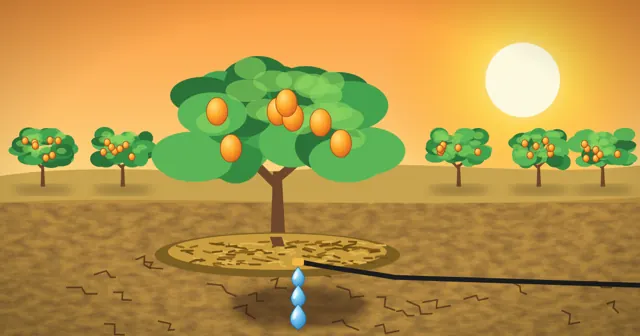
When the product goes to the soil, the dose that reaches each plant decides the result. Too little does not fix it, and too much can harm the roots. Applying a measured dose near the root zone keeps every plant equal. The SWASTI Auto Soil Drenching Device lets you set 20 ml to 500 ml per plant, and fits any battery sprayer pump. Read how drenching differs from spraying.
A weekly leaf walk
Once a week, walk the field and check five plants from each plot: young leaves, old leaves, tips, roots. Photograph anything odd. Catching a problem in week 2 instead of week 8 is the cheapest yield you will save.
Before you apply anything
Read the label, wear gloves and a mask, and keep products away from children and food. Doses differ by crop, soil and product. If you are unsure, ask your local agriculture officer or KVK.
Source: Cornell: how to diagnose plant nutrient deficiencies using leaf symptoms
அடிக்கடி கேட்கப்படும் கேள்விகள்
Where do I look first on the plant, old leaves or new leaves?
Look at both and compare. Mobile nutrients such as nitrogen, phosphorus, potassium and magnesium move to new growth, so deficiency shows first on older, lower leaves. Most micronutrients such as iron, zinc, manganese, boron and copper do not move easily, so problems show first on young, upper leaves.
Can I just spray a micronutrient mixture and see?
A small trial is fine and cheap. Spray a few plants or one row as the label directs, then compare after one to two weeks. Do not spray the whole field blindly. Too much of a micronutrient, especially boron, can harm the crop.
My soil test says zinc is enough but leaves look deficient. Why?
Zinc, iron and manganese can be locked up in soil with high pH, in waterlogged soil or where phosphorus is very high. The nutrient is there but the plant cannot take it up. Check pH and drainage, and ask your KVK about the right correction.
How can I tell a deficiency from a disease or herbicide damage?
Deficiency usually shows as a pattern, matching on both sides of the leaf and often across a whole patch. Disease spots and insect damage are usually uneven and spread from one plant to the next. If unsure, send leaf and soil samples for testing.
இது பொதுவான வழிகாட்டுதல். உங்கள் மண், பயிர், பகுதிக்கு ஏற்ப வேறு முறை தேவைப்படலாம்; எனவே உள்ளூர் வேளாண் அதிகாரி அல்லது KVK-யிடம் கேளுங்கள்.